Craft Is the New Scarcity

Share article
When anything can be generated, the only thing worth paying for is what can't. AI has not killed design. It has repriced it.
Every technology that makes something cheap to produce makes it precious to produce well. Photography freed painters from likeness, and painting gave us Impressionism. Digital made music infinite, and vinyl came back. AI is now doing the same to design. The floor has dropped. The ceiling has risen.
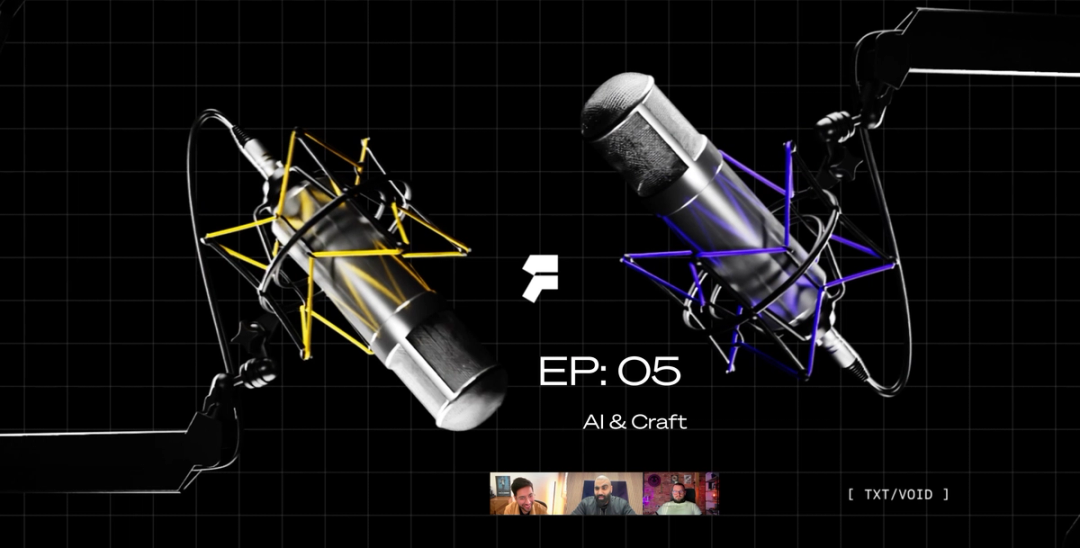
That was the thread running through our latest Format-3 Free Talk. Hardy Sidhu sat down with Dominik and Alki, two designers pushing UI and UX craft forward and long-time collaborators on Format-3 projects. Their work rests on one belief: the best digital experiences make you feel, not just do.
The question was never whether AI makes designers faster. Everyone knows it does. The question was harder. Where does AI make the work better? And what does it unlock that was out of reach before?
The tool changes. The job doesn't.
Alki calls the AI shift one of the biggest moments the industry has seen in years. He also refuses the panic.
"I'm tired of the 'is AI killing design' storyline. It's too hyped. It's a new workflow, like moving from Photoshop to Sketch to Figma."
Every generation of designers lives through one of these. Photoshop to Sketch. Sketch to Figma. Figma to AI-assisted workflows. Each felt like the floor giving way. Each retired a way of working, not the people who understood why the work mattered. Dominik puts it the same way: for designers, this is a change of instrument.
The pattern is worth naming. Tools commoditise execution. They never commoditise judgement. Each wave strips away a layer of manual labour and exposes the layer underneath: taste, intent, the decision about what should exist at all. AI is the biggest wave yet. So it exposes the most.
The end of the specialist bottleneck
For a decade the advice was to become T-shaped. Go deep in one discipline. Be the best editor, the best motion designer. Stay broad around it. In practice the breadth stayed out of reach. You needed a team for every part you couldn't do yourself, and every handoff cost you something.
AI closes that gap. The tools for the edges of the T now sit in every designer's kit. Alki sees the payoff in three places:
- Strategy. Designers can work further upstream, shaping the problem, not just the pixels.
- Prototyping. Ideas move from sketch to something you can touch in hours.
- Handover. Documentation is sharper. Polishing with developers runs smoother.
The deeper shift is not efficiency. It is fidelity. Every handoff dilutes an idea a little. A strategist briefs a designer, who briefs a motion artist, who briefs a developer, and the original spark arrives tired. When one designer can carry an idea from strategy to working prototype, it survives the journey intact. The vision that left the sketchbook is the vision that ships.
This is what the next generation of studios will look like. Smaller teams. Bigger ambitions. Fewer people between the idea and the user. Not "I'm just a motion guy and I need a full team to build things."
Sameness is the real threat
The danger was never that AI would replace designers. The danger is that it makes everything look the same.
AI is a machine for the average. Trained on what already exists, it returns the most probable answer. Probable is the opposite of memorable. And audiences learn fast. AI has been mainstream for barely two years, and people can already spot its fingerprints. They have learned to scroll past them.
We have seen this before. When flat design took over, every interface started to look like Google Material. Clean, competent, interchangeable. The industry eventually worked out that when everything looks the same, nothing stands out, and no brand wins. Once a look becomes cheap, it becomes a signal of cheapness.
Ask AI for a wireframe and it throws everything at the page. Every pattern, every component, every possibility. Someone still has to distil it. Someone has to decide what matters and cut the rest. Design has always been the art of leaving things out. In a world of infinite output, that art becomes the whole game. Originality stops being a nice-to-have. It becomes the only moat.
Every designer is now a producer
Alki reached for music. In the sixties and seventies, records were played on real instruments by real hands in real rooms. Digital production arrived in the nineties and much of it started to sound the same. But originality never disappeared. It moved. It stopped living in the instrument and started living in the artist.
"If you have a form of expression, you can direct any workflow where you want it to go."
Then hip hop happened. Producers dug through crates of old records, lifted a drum break here and a horn stab there, and built sounds nobody had heard before. The raw material was borrowed. The idea was entirely new. Nobody accused a great producer of lacking originality because they used samples. The originality was in the choosing.
That is the designer's position now. AI hands every one of us an infinite crate. Millions of references, patterns, textures and styles, on demand. Access is no longer the skill. Selection is. Recombination is. Knowing which sample to flip, and why, is.
The new creative literacy is curation with conviction. Mixed with intent, AI's output becomes raw material for something original. Without intent, it becomes slop.
Spend the hours where the soul is
Speed is the least interesting thing about AI. What matters is where the saved hours go.
Mood boards, stylescapes and direction boards used to eat a couple of days. Now a designer can say "here's the inspiration, find me more" and be there by lunch. Alki treats AI like a junior or mid-weight designer on the team. It gathers. It drafts. It doesn't decide. The vision stays with him, and so does the responsibility for it.
The sharper insight is about which problems deserve fresh thinking at all. Large organisations spend months, sometimes years, reinventing checkout flows. The best checkout flows already exist. Alki is building an intelligent AI search right now. That kind of project used to take three or four months across discovery, definition and build. It now takes about half, because search is a solved pattern that can be recycled.
This is the discipline the best teams will master. Split the work into solved problems and unsolved ones. Recycle the solved ones without guilt. Pour everything into the unsolved ones, because that is where reputations are made. The brands that win in the AI era won't be the ones that use it most. They will be the ones that know exactly where not to.
The vinyl effect
Dominik took the music thread somewhere else: the sleeve. In the fifties and sixties, a vinyl record came with a twelve-inch canvas for art. Then cassettes shrank it. CDs shrank it again. Streaming took it away entirely, and album art became a thumbnail.
Now it is coming back. In Poland, Dominik sees vinyl, CDs and digipacks returning to the shelves. People want something handmade and physical they can hold, not just another playlist. When music became infinite, the object became precious.
He expects design to follow the same arc. Right now AI slop is everywhere, from restaurant menus to banner ads. Within one to two years, he believes, people will notice. They will start to value handcrafted work again, and the market will rebalance. It is a trend today. It is also a natural stage of evolution.
Take that one step further. We already pay more for hand-thrown ceramics, hand-stitched leather, small-batch coffee. Not because the machine-made version doesn't work, but because the human version carries intent. Digital experiences are heading the same way.
"Made with care" is about to become a brand position, not just a working method. The companies that invest in craft now will own that position when the market wakes up to it.
The honest cost
Optimism shouldn't blind anyone. Dominik was clear that this shift is not a win for everyone. It depends where you stand.
A small shop on thin margins can now save real money with AI-generated design. For them, that's a fair trade. But the small designers who used to do that work are losing it. One person's workflow upgrade is another person's lost income. Both things are true at once.
What we are watching is the middle hollowing out. Commodity design, the logo-for-a-hundred-quid tier, is moving to machines. At the other end, work that demands judgement, emotion and originality is becoming more valuable, not less. The path forward for designers is to climb. Away from production. Toward direction. The industry owes its people honesty about that, and help getting there.
The idea is the last scarcity
So what is left that is truly ours? Hardy put it plainly. The idea.
AI can gather references, draft wireframes and rebuild a solved checkout in an afternoon. It can produce a thousand options before you finish your coffee. What it cannot do is want something. It has no point of view. It cannot decide what a brand should feel like, which sample to flip, or why a moment in an interface should make someone catch their breath. Taste, intent and the original idea still sit with the designer.
The next decade of design will belong to people who direct, not people who operate. Designers who treat AI as an orchestra, not a replacement. Studios that use machines to clear the ground, then spend every reclaimed hour on the part no machine can touch.
That is the bet Format-3 is making. Let AI handle the solved. Pour craft into the unsolved. Make work people feel. When everything can be generated, the things that were clearly made by someone, for someone, will be the things that last.
Adapted from F3 Talk, October 2026, with Dominik and Alki.

More thoughts
Thought leadership creates value, builds knowledge and takes a stand, bridging the gap between traditional and digital platforms

Agent-first brands: Adapting for AI-driven discovery
Discover how agent-first brand strategy is reshaping discovery in technology, healthcare, and entertainment as AI agents become the gatekeepers of purchase decisions.
Driving Growth with Attention, Transparency, and Friction
Discover how our approach helps the team thrive and deliver impactful work.
SayHello!
- 14:13:34NashvilleUSA
- 15:13:34New YorkUSA
- 20:13:34LondonUK
- 21:13:34KatowicePoland
- 21:13:34BratislavaSlovakia
- 22:13:34PlovdivBulgaria
- 00:13:34DubaiUAE